How AI is Preventing Car Accidents on Crowded Roads
Being safe on the roads is a lesson we learn as kids and share with our families over the years. Learning to drive carefully to protect oneself and others is a basic tenet in any driving school.
And yet, car accidents remain common around the globe. US Department of Transportation data from 2021 shows that over 40,000 people were killed in vehicle crashes that year. More than 7,000 had been walking.
Fortunately, emerging technologies have introduced newer, more dependable car features that can prevent accidents. They can be especially helpful in crowded streets and tricky road sections, where even experienced drivers may struggle.
Here are three AI-driven features that could make a huge difference to your driving safety.
1. Emergency Braking That Doesn’t Rely on Driver Reaction Time
While driving on crowded streets, unexpected events can catch people unaware. Since the traffic density is high, and the urge to close the gap is also high, a sudden passerby or pet can cause a huge disruption. The driver may be unable to respond in time, leading to an unfortunate event.
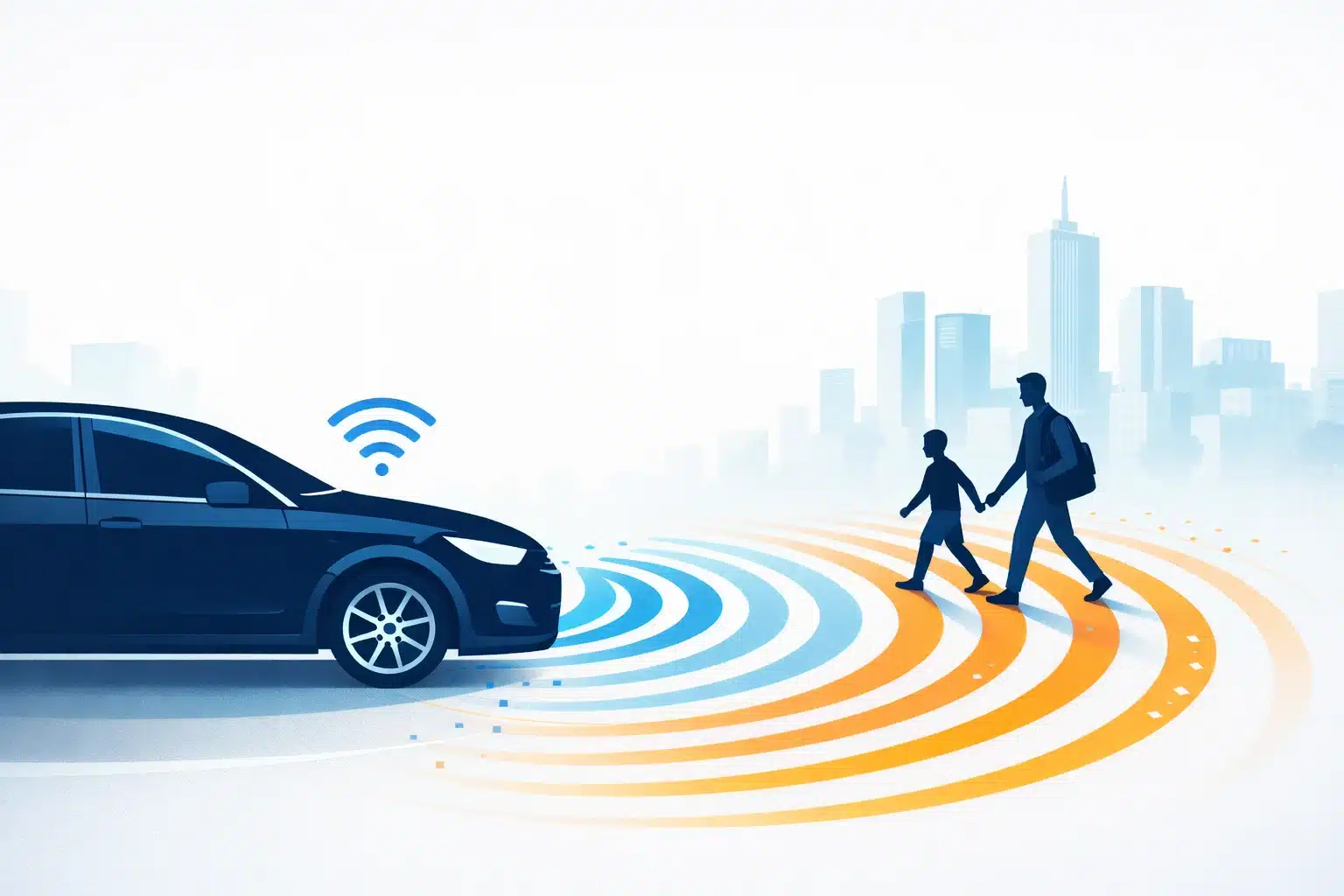
Enter AI-powered advanced driver assistance systems (ADAS), and the human element of uncertainty goes out the window. These systems use a mix of cameras and computer vision to monitor the surroundings and notify the driver immediately. The best part is that they can initiate emergency braking if you fail to react within a certain time.
Newer systems are one step ahead. They monitor even more minutely for older adults or children, who are at higher risk of injury in densely trafficked areas.
Time and again, such systems have met with polarizing reactions. While many appreciate the constant monitoring and alertness, others are unsure about ‘letting go of control’ for braking.
The World Economic Forum points out that some drivers may rely too much on ADAS systems and stop being attentive on the road. In contrast, others may deactivate them from their cars due to a feeling of discomfort or surveillance.
Whichever club you belong to, let’s remember that being safe is hardly negotiable.

We know many car accidents in the US (and elsewhere) happen due to distracted driving. And no, driving under the influence is hardly humankind’s only failing.
The CDC reports that teenagers aged 16 to 19 years have the highest risk of motor vehicle crashes. Sadly, this age group is also susceptible to severe impact from distraction, since they are inexperienced.
In areas notorious for car crashes, such as I-270 and Highway 40 in St. Louis, distracted driving is likely to be an even bigger issue than we realize. It may start with something seemingly minor, like making a phone call while driving. However, as a St. Louis car crash lawyer will attest, the resulting collisions can cause traumatic brain injuries and even spinal cord damage.
An AI-based system that detects driver distraction can be a blessing for preventing such circumstances. It can monitor small bodily signs, such as blinking patterns and gaze direction, to assess if the driver is focused on the road. Drowsiness or inattention will get flagged immediately through visual or auditory alerts. And voila! A tragedy will have been averted.
More industry and regulatory bodies are coming forward to encourage such features and promote road safety. In fact, even if the worst does happen, having the necessary preparation in place will help you while seeking support.
For instance, if your car is equipped with proactive safety features, you will have an edge while making insurance claims. According to TorHoerman Law, professional attorneys will not only investigate the accident but also negotiate with insurance companies, so the victim can concentrate on their recovery.
3. Real-Time V2X Communication to Avoid Congestion
Predictive analytics is a well-established application of AI for traffic management. One can predict which roads will be busy and plan accordingly. A lower chance of congestion directly reduces the risk of accidents.
However, lately, Vehicle-to-Everything (V2X) communication has taken off spectacularly, allowing traffic systems to be more responsive to congestion that has already occurred. This could be on account of a crash or a sudden bout of rough weather. When you are out on the road, you need a plan of action that involves rerouting or de-bottlenecking.
A 2025 research study in Scientific Reports suggests that V2X can create a data-driven traffic ecosystem to facilitate situational awareness and quick response. It is a big step forward for route optimization and intelligent transportation, which are core tenets of road safety.
All in all, a brilliant opportunity to explore the next time you spruce up your vehicle!
AI interventions often get a mixed response: while some herald them as groundbreaking, others find them fatuous and ‘trending’ without sustainable value. But in the automotive sector, AI has proved its mettle in enhancing vehicular resilience, one of the most critical parameters in transportation.
Here’s hoping more of us explore these possibilities for our safety and that of passengers, other drivers, and pedestrians.
Like What You’ve Read?
For more articles like this, receive our weekly e-newsletter, including partner deals and all things motoring, register your email below.
Please note: You cannot subscribe to Smart-Motoring unless you put a tick in the checkbox below to indicate have read and agreed to our privacy policy.
Summary

3 AI Features That Make a Car Accident Less Likely on Crowded Streets
Description
Discover new AI-driven safety alerts, driver monitoring, and real-time pedestrian detection to prevent accidents on busy roads
Author
Deboshree Bhattacharjee
Smart Motoring
Publisher Logo


Related Posts
Why Your Car Feels Sluggish: Air Intake Problems Explained
Xiaomi Vision Gran Turismo: 1,900hp Phone Maker’s Hypercar