Why It Can Hurt Safety, Insurance and Value
Taking off a bull bar can seem like a harmless choice, maybe you are after a cleaner look or hoping to cut down on a few extra kilos. But that simple adjustment can have bigger consequences than you might think.
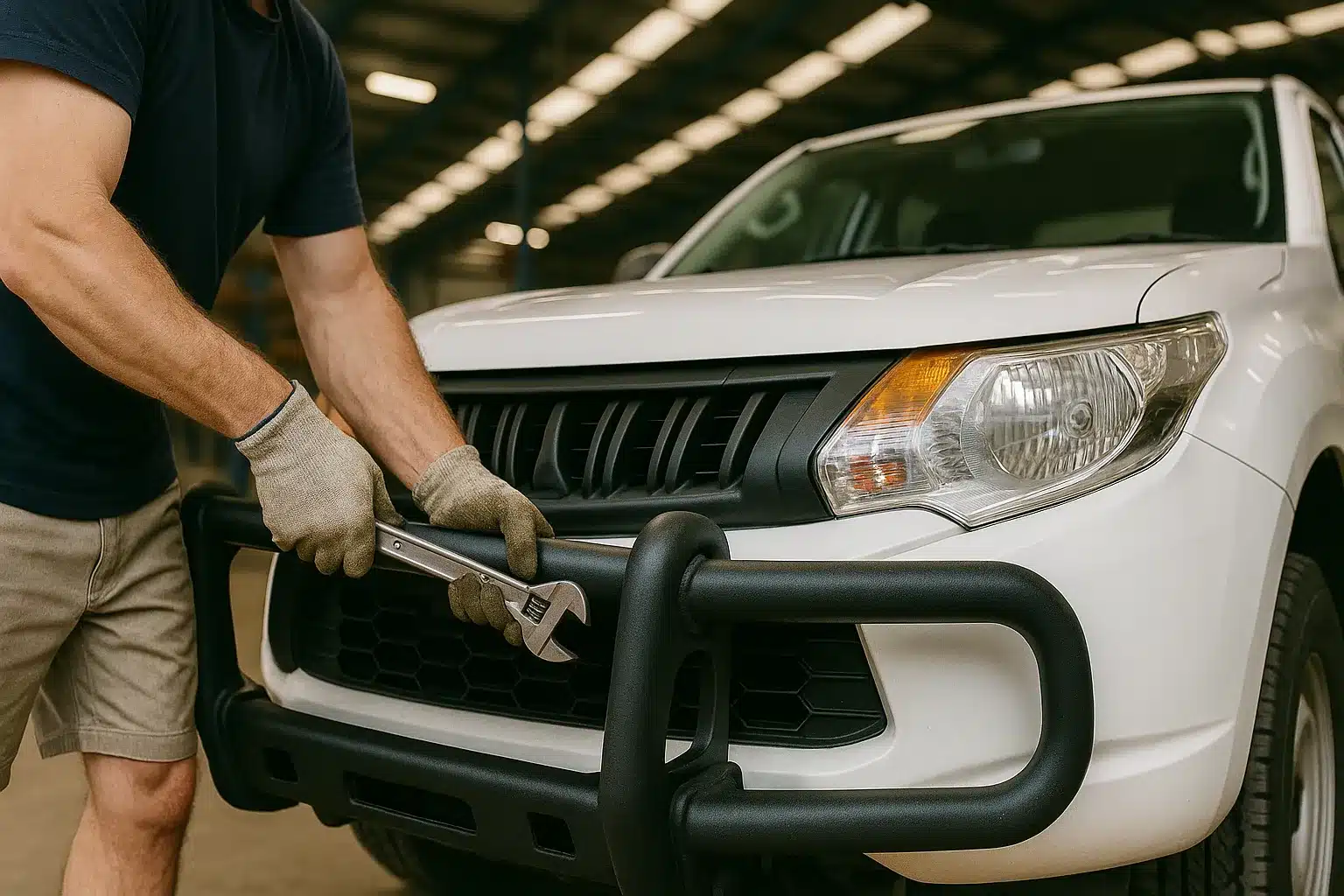
Beyond the aesthetic side, it affects protection, safety systems, and even resale value. And for anyone driving a Ute or 4WD fitted with Toyota bull bars, the decision deserves a second look.
What you lose in practicality and safety might outweigh any gains in style or convenience.
A Bull Bar Is Your First Line of Defence on and off the Road

A well-fitted bull bar serves a purpose far beyond looks. It is your first layer of defence against animal strikes, roadside debris, or the occasional low-speed collision.
On country roads, it can be the difference between a scare and a serious repair bill. By absorbing and deflecting impact, it shields essential components such as the radiator, headlights, and grille from costly damage.
Even in the suburbs, unexpected moments happen like a careless parking mishap or a scrape in a tight driveway. Without that added barrier, your standard bumper offers little more than cosmetic protection.
Taking off the bull bar leaves you exposed to damage that could have been easily avoided.
Why Removing It Can Affect Vehicle Safety Systems

Modern bull bars are designed to work hand-in-hand with your vehicle’s built-in safety mechanisms.
Airbags, crumple zones, and sensors all rely on specific calibrations that factor in the presence of the bar. Remove it, and you may disrupt how those systems respond during a crash.
That can alter the timing of airbag deployment or the effectiveness of the vehicle’s impact absorption.
If you venture off-road, the consequences are even more obvious. Without that solid front protection, your 4WD becomes more vulnerable to knocks from rocks, logs, and uneven tracks.
Approach angles are reduced, recovery points become harder to access, and every trip into rugged terrain carries a higher risk of damage.
How Insurance And Legal Standards Come Into Play
Modifying your vehicle’s structure can easily tangle you up in insurance complications. If your insurer has assessed your car with a bull bar attached and you later remove it without updating your policy, it could affect how future claims are handled. You might even find certain types of coverage voided due to the undeclared change.
Depending on your region, bull bars must meet certain design and fitting standards to stay road legal. Remove one, reinstall it later, or fit a different model without certification, and you could find yourself on the wrong side of the regulations.
Why Resale Value And Functionality Are Closely Linked

Buyers in the second-hand market tend to favour vehicles that are ready to work or travel. A well-maintained bull bar signals practicality and is a bonus feature for those planning to tow, tour, or take the vehicle off-road. Remove it, and you could limit your pool of potential buyers or drive down the perceived value of your vehicle.
Beyond resale appeal, bull bars often double as mounting points for accessories like driving lights, winches, or antennas. Once the bar is gone, so are those attachment options. Reworking your setup without one can mean extra costs and effort that many drivers don’t anticipate.
Takeaways
If you are considering removing your bull bar purely for a cleaner design or slight weight reduction, take a step back and think long-term. The protection, safety assurance, and practicality you lose may not be worth the minimal gains in looks or handling.

Instead of ditching it altogether, you might explore updated designs. Modern bars are lighter, better integrated, and often engineered to complement the vehicle’s body lines without sacrificing strength.
This gives you the best of both worlds, a sharp appearance and dependable protection.
Like What You’ve Read?
For more articles like this, receive our weekly e-newsletter, including partner deals and all things motoring, register your email below.
Please note: You cannot subscribe to Smart-Motoring unless you put a tick in the checkbox below to indicate have read and agreed to our privacy policy.