Future Classic Cars: Expert Picks & Buying Notes (2025)
Last updated:
Classic cars have taught us a valuable lesson about taste, nostalgia and the things we once dismissed.
A few years ago, Dave Gahan, singer with Depeche Mode, was asked if (as a man with his own take on sartorial elegance) would be getting back into the recycled fashion of flared trousers. While his response was made funny by his use of expletives, to sum up he said, no chance; ‘I’m old enough to remember how bad they were first time round!’
Fashion isn’t just about clothes; we use fashion and trends to dress our houses as well as ourselves, and our choice of automobile is no exception.
What becomes timeless and never goes out of fashion is a bit of a dark art, including classic cars; absolutely no one can confidently predict how we will perceive today’s items in the future. Or can they?
Classic Car Destiny: Index & Jump Links

1. What Makes a Car a “Future Classic”?
When I began writing about cars, the “classic” label felt reserved for vehicles at least 20-30 years old, with patina and stories. Nowadays, we’re increasingly asked: which of today’s cars will qualify as future classics? So I’ll lay out how I, after five decades of motoring enthusiasm, judge a car’s future-classic potential.
Essentially, three factors matter: design & style, driving experience, and cultural/market significance.
A car that looks great but feels lifeless, or a car that drives brilliantly but has zero emotional or cultural weight, will struggle.
And market dynamics (rarity, demand, brand halo) matter deeply. Recent analyses support this: for example, the UK-based motoring press has flagged several modern models as having “future classic potential”.
Another point: the classic-car market is shifting. The organisations that regularly publish valuation data (such as Hagerty) have noted that cars from the late 1990s and early 2000s are now entering the “modern classic” zone, the pool of likely future icons.
2. How Today’s Trends Influence Tomorrow’s Icons
Let’s be honest: we live in a world where EVs, connectivity, automation and regulatory change are reshaping what a car is. That means future classics may not look like what we traditionally expect.
Some upcoming icons might be fully electric or hybrid, but still have the emotional appeal. Others might be the “last of their kind” – the final petrol V10, the last manual gearbox, the last of a purist breed.
It’s already been noted that the sports-car market in 2025 is “ripe with opportunity”, and models such as the Audi R8 are front-runners. So there’s no guarantee that only “retro” cars become classics – advanced tech cars can too, provided they have soul.
3. Key Indicators of Future Classic Potential
Here are the factors I apply when assessing each candidate below:
- Rarity / limited production – special editions often hold long-term appeal.
- Ending of an era – e.g., last naturally-aspirated engine, last manual, last of a design line.
- Performance with feel – you want something that genuinely drives, not just looks.
- Emotion & desirability – people must want it now and imagine loving it in 10-20 years.
- Practicality / usability – one or two quirks are fine, but if it’s completely impractical you reduce the market.
- Brand and heritage backing – a brand with a legacy adds weight.
- Cultural resonance – movies, media, sub-culture, history all help.
I’ve picked eight cars that the original article listed, re-analysed them, updated with current context, and offered commentary both positive and critical. Let’s go.
4. Audi R8 Coupé V10 Performance


Why it’s a strong future-classic candidate
The first-generation Audi R8 (and especially the V10 Performance) represents a rare breed: a mid-engine supercar built by a non-exotic brand, with a naturally-aspirated 5.2-litre V10, that looks and feels like a proper driver’s car.

Its styling has aged gracefully, and many enthusiasts have already begun calling the first-gen R8 a modern classic.

The fact that Audi is moving fully into EV/hybrid territory (thus ending the era of pure petrol supercars) strengthens the case.
Weaknesses / caveats
- Service and running costs are high; that may discourage long-term ownership unless you’re committed.
- Technology-wise, it will age – the in-car systems will feel decades behind in 20 years.
- The premium-brand supercar market is competitive; you’ll want the special editions (V10 Performance, R8 V10 RWD) for best future value.

Interesting facts & features
- The R8 shares some DNA with the Audi R8 LMS GT3 racing car – underlying dynamics are strong.
- The V10 Performance pushed the R8 into 0-62 mph in around 3.1 seconds (UK spec).
- At a time when naturally-aspirated high-revving engines are vanishing, this is one of the last.
- According to market-watchers, the Audi R8 is already being flagged in “best modern classic” lists.

Verdict
If you spot a well-kept low-mileage R8 V10 Performance, particularly the rear-wheel-drive version with manual gearbox (if you can find one), it’s a very credible future classic. The combination of heritage, drivetrain, styling and performance ticks the right boxes.
5. Volkswagen ID. Buzz


Why it might become a future classic
The ID. Buzz offers a blend of retro styling (echoing the original VW Type 2 “Camper”) with modern electric architecture. In the UK it stands out because it’s an EV with character, two-tone paint themes, and strong brand heritage behind it.
The fact it hearkens back to one of the most loved vehicles (the original Campervan) gives it emotional weight.

Weaknesses / caveats
- It’s a van/MPV form rather than a sports car; the “classic collector’s car” market tends to favour performance or rarer vehicles.
- EV technology is evolving fast—so early examples may age in terms of range, battery tech and connectivity.
- Without scarcity or a high-performance version (yet) its value appreciation may be cautious.
Interesting facts & features
- The ID. Buzz launched in the UK market with a strong pre-order demand and two-tone schemes prominent in the spec.
- It uses VW’s MEB platform, and is marketed towards lifestyle, design-aware buyers rather than just commuters.
- In many ways, it could become a design icon of the 2020s EV era—kind of like the Mini Cooper was for the 2000s.

Verdict
While I wouldn’t rank it as strongly as the supercar candidates above, the ID. Buzz holds a niche but credible chance of classic status, especially if VW releases limited editions or if the model becomes associated with the “first wave” of desirable EVs.
For someone who loves design, heritage and USW-VW culture it’s worth a watch.
6. MINI John Cooper Works GP3


Why it could shine
The GP3 is the third generation of the MINI John Cooper Works ‘GP’ series, and as such carries pedigree.
It is limited in production, hard-core in performance (306 bhp+ in the UK spec), and built for fans who want track performance in a compact car.

The “hot hatch” niche has fully joined the classic-car conversation.
Weaknesses / caveats
- Its ride is brutal for daily use (as reviewers note), which may limit appeal to only hardcore fans rather than broader collectors.
- As a small hatch, scale of value growth may be lower than exotic brands.
- Manual gearbox purists will note this version is auto-only in the UK; that may slightly reduce future ‘desirability’ among purists.

Interesting facts & features
- The GP3 drops rear seats for weight savings and improves performance – a sign this isn’t just a dressed-up hatch.
- The production run is limited (US/UK allocation low) which helps rarity.
- The GP3 shines in the category of “driver-focused, special-edition lightweight performance.”
- This is exactly the sort of modern classic niche the press is pointing to: performance hatchbacks of the 2010s/2020s.

Verdict
If you’re a fan of hot-hatch culture, driving enjoyment and limited editions, the MINI JCW GP3 is a credible future classic. It ticks the “limited production”, “driver appeal” and “heritage badge” boxes nicely.
7. Nissan GT-R


Why it qualifies
The Nissan GT-R lives in legend territory already. It implements JDM (Japanese Domestic Market) performance with brute force, twin-turbocharged V6, AWD, and superb track capability.

Many enthusiasts already view it as a modern classic. The very fact that the car is still in production in some markets, but with the likely closing of this chapter, adds to the “last of its kind” appeal.

Weaknesses / caveats
- Some find the emotional appeal lacking compared to European supercars; tech-heavy cabin, less elegance.
- Maintenance, specialised servicing, parts and left-hand drive importation can be issues in the UK.
- Its ubiquity (there are many GT-Rs) means scarcity may not be as strong as other hyper-special editions.
Interesting facts & features
- The GT-R’s performance envelope (0-62 mph in circa 2.9-3.2 s in later models) places it among the fastest all-purpose cars.
- The Nismo versions are especially desirable (carbon-fibre components, extra power, limited runs).
- For many fans of Japanese performance cars (JDM culture), the GT-R is the icon—they might help value rise.

Verdict
If I were picking my “already classic” category, the GT-R belongs there. It has the heritage, the performance and the cultural relevance.
Investment-wise, pick a well-sorted example, ideally with low mileage and full service history, and you’re in good stead.
8. Land Rover Defender OCTA


Why the argument holds
The classic boxy Defender lineage has always had appeal. With the OCTA (a limited-edition twin-turbo 4.4-litre V8 variant) Land Rover produced an extremely high-performance version that marries the heritage shape with modern muscle.

For enthusiasts who love the “last of the beasts” story, this is an appealing candidate.
Weaknesses / caveats
- Its price at launch was very high, limiting the number of potential second-hand buyers.
- Running costs (fuel, tyres, service) for such a powerful variant may deter long-term ownership.
- Its identity as a “performance SUV/4×4” rather than pure sports car might reduce pool of classic-interested buyers.
Interesting facts & features
- The OCTA (Off-Road Capability Tested & Approved) moniker emphasises both on-road and off-road performance.
- While the standard Defender has mass appeal, the limited, high-performance variants are rare – a key classic criterion.
- The styling remains recognisably Defender even while modernised—heritage cues strong.

Verdict
While not a “super-car” candidate in the conventional sense, the Defender OCTA ticks enough boxes to qualify in the “this could be a future classic” list.
Particularly for those who favour sideways looks and aren’t driven purely by lap times.
9. Honda Civic Type R FL5


Why it stands out
The FL5 generation of the Civic Type R carries the Type-R badge (a name with motorsport and enthusiast legacy) into the modern era.

It offers serious performance (in the hot-hatch segment) and practicality (five doors), which broadens its appeal.
The original article notes it received a 5-star rating by Evo magazine: such endorsement matters.

Weaknesses / caveats
- It remains one of many high-performing hot-hatches; the rarity factor might be less strong.
- Hot-hatch buyers often thrash their cars, so condition and service history will matter for future value.
- The shift to electrification across Honda’s range may reduce future appeal of petrol hot-hatch models.
Interesting facts & features
- The FL5 uses a 2.0-litre turbocharged engine with ~320+ bhp (UK spec) and sharp chassis tuning.
- Outside styling is aggressive (wing, red accents) but still usable as a daily.
- The five-door body makes it more versatile – a trait that appeals to younger collectors who want useability and performance.

Verdict
For someone focused on driving fun, brand heritage, and long-term ownership (with sensible use), the Civic Type R FL5 has genuine future-classic potential.
It’s not exotic, but it’s credible and enjoyable.
10. Hyundai IONIQ 5 N


Why it’s intriguing
Here we shift into electric-vehicle (EV) territory. The IONIQ 5 N is Hyundai’s first fully-electric performance model under the “N” badge (which stands for their sporty line).
The combination of EV tech + performance makes it forward-looking. It also bridges the gap between practicality and driver-focus.

Weaknesses / caveats
- It is very new; long-term data on reliability, battery ageing, market demand aren’t fully settled.
- EV technology evolves quickly – early models may feel dated sooner.
- Charging infrastructure (especially used-car resale) and depreciation of battery-driven cars can add risk.

Interesting facts & features
- The IONIQ 5 N reportedly offers 0-62 mph in under 4 seconds (depending on spec) and has a virtual gear-shift experience, uniquely combining EV smoothness with performance feel.
- The design defies typical “boxy EV” stereotypes – it’s stylish, aggressive and driver-oriented.
- Being among the first true “electric hot hatches” gives it a story – “first generation of …” which helps long-term interest.

Verdict
If you are willing to take a slightly higher risk (because of novelty), the IONIQ 5 N could become a collectible marker of the EV revolution.
For driving enthusiasts who accept EVs and want something special, this is a smart watch.
11. BMW i8 Roadster


Why it’s compelling
The i8 Roadster is futuristic, visually striking, and hybrid-driven (petrol plus electric). It was way ahead of its time when launched.
Its gull-wing doors, low-slung body and “future supercar” aura give it presence. According to several guides, the BMW i8 is already one of the most credible “next-gen classics”.

Weaknesses / caveats
- The actual performance (in fun-to-drive terms) isn’t on par with pure petrol supercars of the same era.
- Complexity of hybrid systems may deter some collectors aiming for low-maintenance cars.
- Values have not yet exploded; this could be an opportunity but also a gamble.
Interesting facts & features
- The i8 combines a turbocharged 1.5-litre petrol three-cyl with electric motors — unusual architecture for its class.
- Its design still turns heads years after launch, which is a good sign of timelessness.
- The Roadster version is particularly rare compared to the coupe, which enhances future rarity potential.

Verdict
For a collector with an eye for design, technology and avant-garde performance, the BMW i8 Roadster is a strong pick.
It may not be as pure as some petrol supercars, but it offers uniqueness and is likely to become a conversation piece.
12. Bonus: Could I Still Add One More
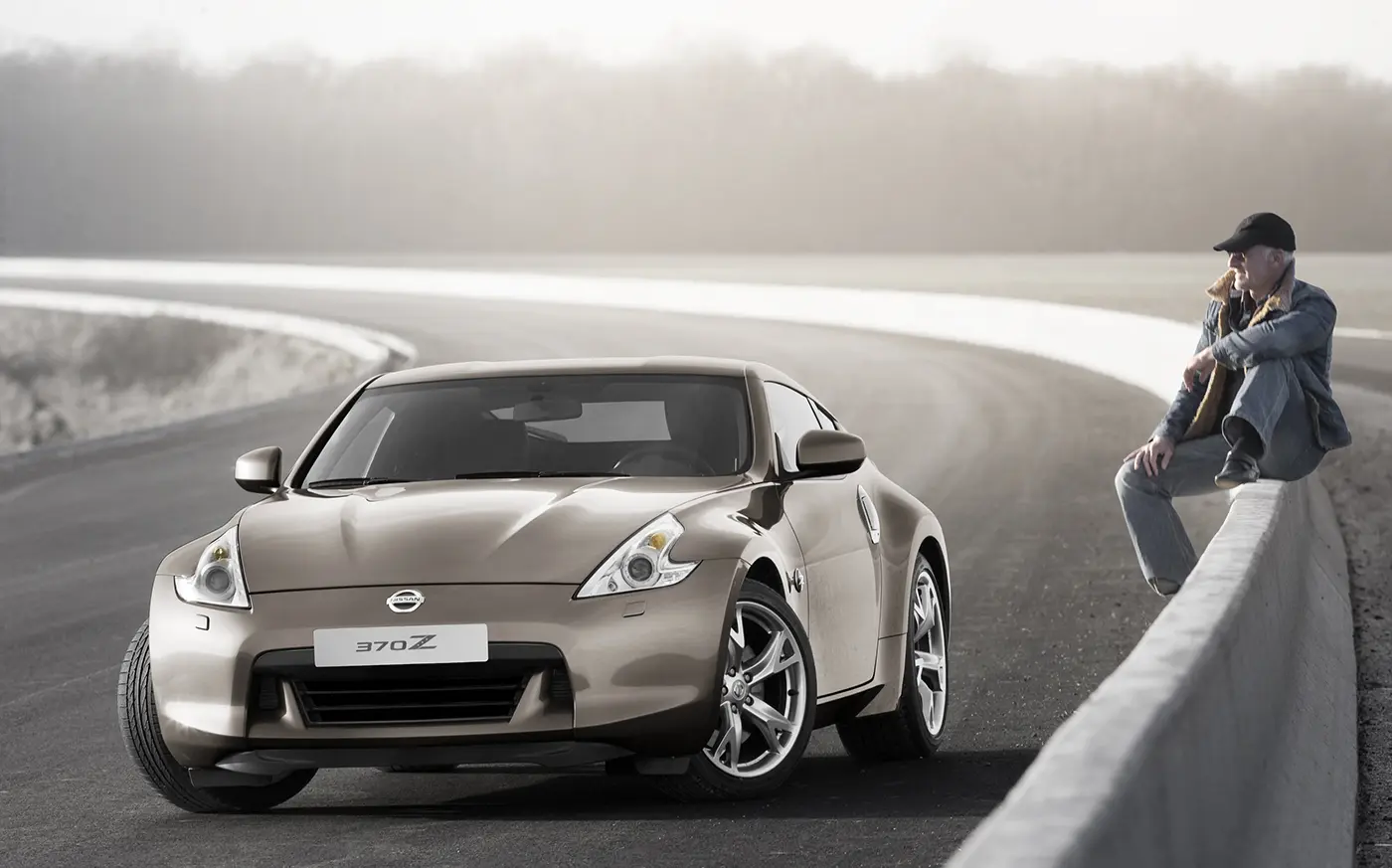
Yes, if I were to add a wildcard, I would nominate the Nissan 350Z (as the original article hinted). It may not be as high-spec or rare as some others, but it ticks the boxes of affordable, driver-focused, enthusiast-friendly.

Sometimes the best “future classics” are the ones you can still afford and enjoy now.


13. Final Thoughts: Are They Truly Future Classics?
So there you have it — eight (plus a wildcard) vehicles with credible claims to future-classic status. As I mentioned at the start, no one can guarantee which car will become a timeless icon; market forces, bidder enthusiasm, condition, service history and trend shifts all play their part.
But by applying the criteria above, you tip the odds in your favour.
A few closing thoughts for enthusiasts:
- Buy condition, not just spec: A car with great history and care will out-perform the rare “junk spec”.
- Look after the car: Originality, low mileage, full service history improve future value.
- Enjoy the car: A future classic that brought you joy is worth far more than one you never drove.
- Be aware of risk: EVs and hybrids are exciting, but long-term future-classic status may carry additional unknowns (battery health, software obsolescence).
- Think long-term: Many of these cars will still have their golden moment in 10-15 years. Patience pays.
If I were to pick one single car right now to park in a heated garage and forget for a decade — I’d pick the Audi R8 V10 Performance.
But for pure driver fun with less risk, the BMW i8 Roadster or the MINI JCW GP3 are very tempting.
FAQ
A future classic typically combines rarity, desirability and a memorable driving feel. Cars that represent the “last of their kind” — such as manual gearboxes or naturally aspirated performance engines — tend to rise fast. You’ll spot many of these traits in our classic cars guide and across iconic models admired by enthusiasts.
Performance models with limited production runs and unique tech are strong bets. Examples include the Audi R8 V10 Performance, MINI JCW GP3, Nissan GT-R, Land Rover Defender OCTA, Honda Civic Type R FL5, Hyundai IONIQ 5 N and BMW i8 Roadster are all admired by enthusiasts and tipped for future desirability.
Yes, especially early enthusiast-focused EVs. Cars that introduce new technology or deliver surprising driver engagement, like the Hyundai IONIQ 5 N or pioneering plug-in hybrids such as the BMW i8 Roadster, could become highly collectable as the automotive world shifts away from combustion engines.
They can, but it depends on timing and condition. Low-mileage, well-kept models in the right specification tend to hold or grow value over time. Buying a car you also want to drive means you enjoy ownership, even if values take longer to rise. Patience and proper care are key to a successful investment.
Look for signs like limited numbers, a loyal enthusiast following, awards from respected magazines, and a strong brand legacy. Factory originality, manual transmissions, rare colour combos and full service history all improve long-term desirability. If a car feels special today, collectors may fight for it tomorrow.
For future classics, originality is everything. Rare OEM wheels, interior finishes and factory paint elevate desirability and value. Upgrades can reduce appeal unless they are easily reversible or officially approved performance parts. Keep original components safely stored if you do decide to tweak anything.
Images: audi.co.uk, vw.com, nissannews.com, landrover.com, bmwgroup.com, hyundai.news, mini.co.uk
Like What You’ve Read?
For more articles like this, receive our weekly e-newsletter, including partner deals and all things motoring, register your email below.
Please note: You cannot subscribe to Smart-Motoring unless you put a tick in the checkbox below to indicate have read and agreed to our privacy policy.
Summary

8 Cars That Could Become Future Classics — Expert Guide 2025
Description
Want a car that drives well today and might become a classic tomorrow? Here are eight excellent choices, analysed with decades of expertise.
Author
Sean Neylon
Smart-Motoring
Publisher Logo